
When words catch up with reality
Notes from our 40th anniversary celebrations.
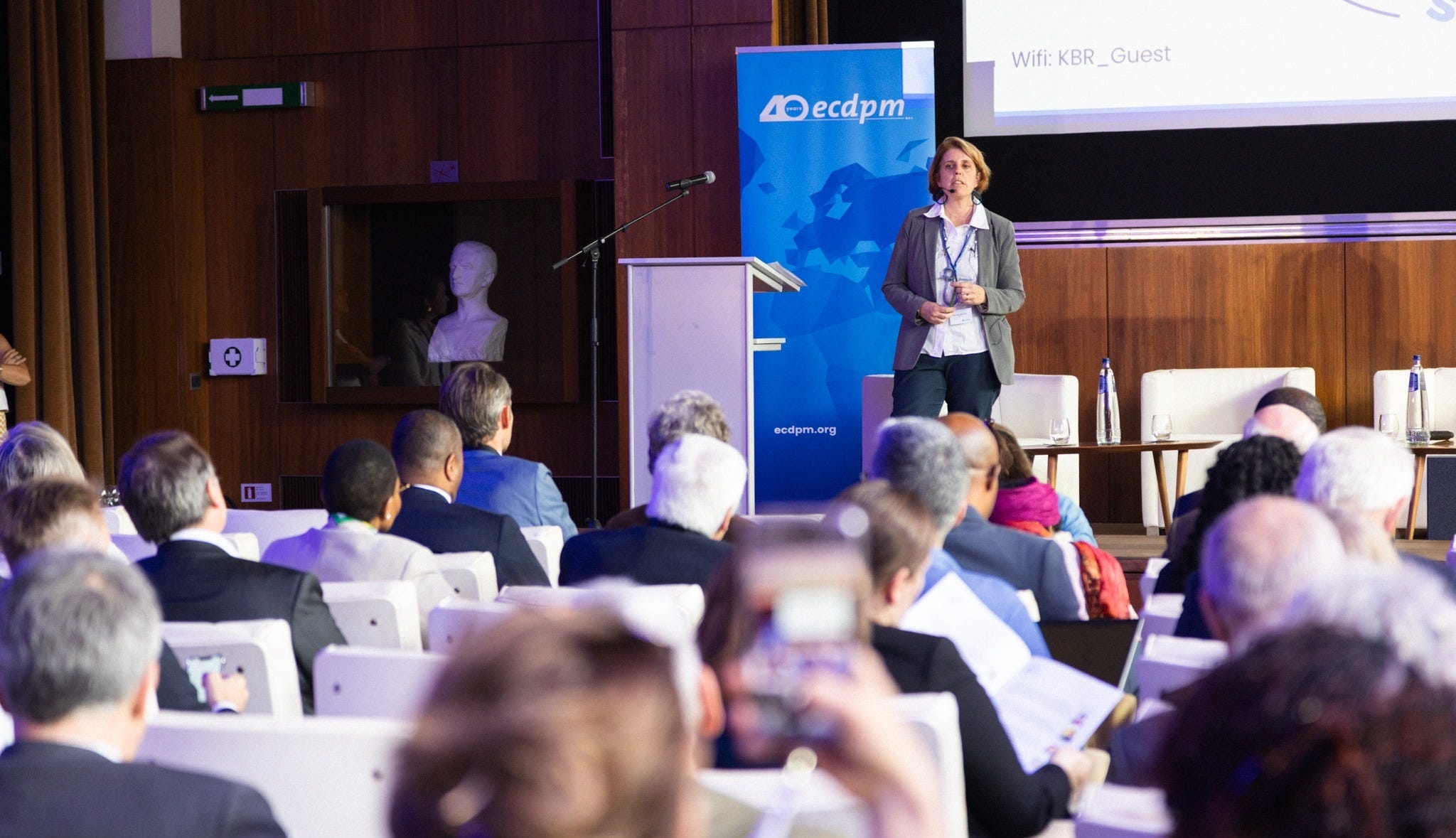
“When the organisation I work for, ECDPM, was founded in June 1986, the Berlin Wall was still standing”.
This is how I opened our 40th anniversary conference in Brussels.
“Europe was divided in two. The continent was trying to grasp the consequences of the Chernobyl nuclear disaster, in a country, Ukraine, that today sits once again at the heart of Europe’s anxieties. In South Africa, 1986 was a turning point in the struggle against apartheid. Across the Atlantic, exactly like this year, a World Cup was underway, that one in Mexico. Diego Armando Maradona was about to score the most controversial goal in football history,” – but also one of the most beautiful, I was reminded later.
“That world was bipolar. It wasn’t safer. But in some ways, it looked simpler. The world we work in today is anything but.”
The day was, of course, about ECDPM’s own story. Forty years of connecting policy and practice, Europe and its partners, analysis and action. Forty years of adapting our work to new contexts: from capacity development to international cooperation, broadening into trade, security, migration and climate, and moving from a focus on EU policies in ACP countries to Africa, India, Ukraine and beyond.
But anniversaries are only useful if they look forward. Our title ‘Geostrategic partnerships for shared prosperity’, tried to express that: what our work can offer in a world of power politics and shrinking budgets.
As the event unfolded, I found myself wondering: are we discussing new forms of – and using new words for – international cooperation? Or are the same words finally being forced to mean something?
From forecast to weather
The question came to me while listening to our keynote speaker, Ambassador Pieter Jan Kleiweg de Zwaan, now Dutch Permanent Representative to the EU, who had also spoken at ECDPM’s 25th anniversary event in 2011. Back then, he recalled, foreign policy still came in separate boxes: trade and investment in one, development cooperation in another, security and defence somewhere further away, with human rights and multilateralism as overarching principles.
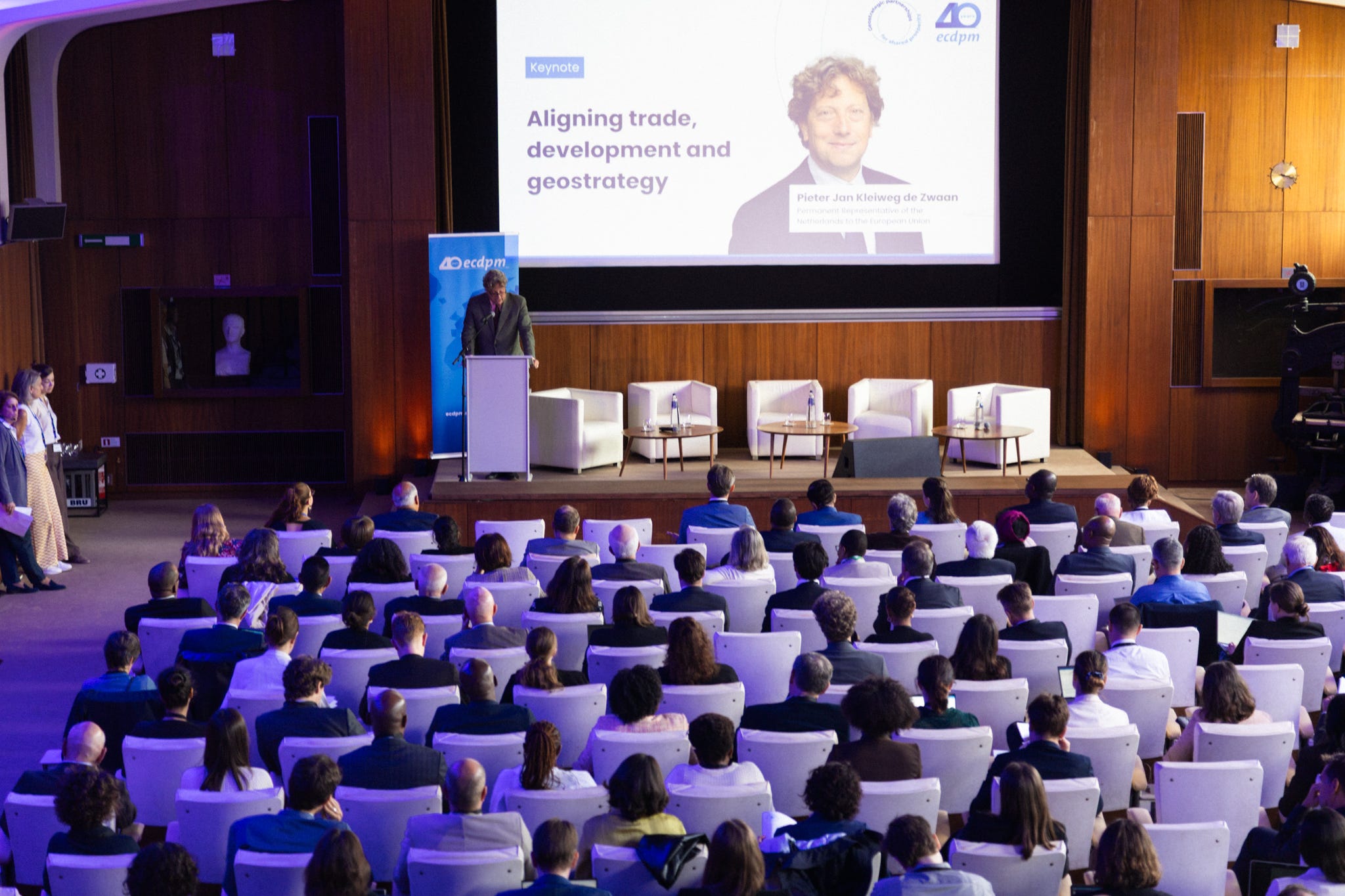
Today, he added, those boxes have collapsed into each other.
That comment sent me back to the archive. I looked up the background paper prepared for ECDPM’s 2011 anniversary, expecting distance. Instead, I found some surprising similarities.
Some of the concepts we are exploring today were already there. Emerging players, multipolarity, common interests. A donor-recipient model that is no longer fit for purpose, if it ever was. Even variable geometry and coalitions of the willing appeared back then as possible ways to navigate a more complex world.
So the words we are using today are not new. Nor are some of the proposed solutions.
One could be cynical about it. But that would miss the more interesting point. The analysis has been there for some time, and ECDPM was already paying attention to it. What has changed is the force behind it.
What was once a forward-looking diagnosis has now become the operating environment.
In 2011, emerging powers could still be discussed as a trend. In 2026, partner countries are actively diversifying their options. In 2011, mutual interest could still sound like an updated vocabulary for development cooperation. In 2026, it sounds like a condition for relevance. In 2011, flexible coalitions were one possible answer to institutional complexity. In 2026, issue-based coalitions are what many people in the room instinctively reached for when asked where multilateralism is headed.
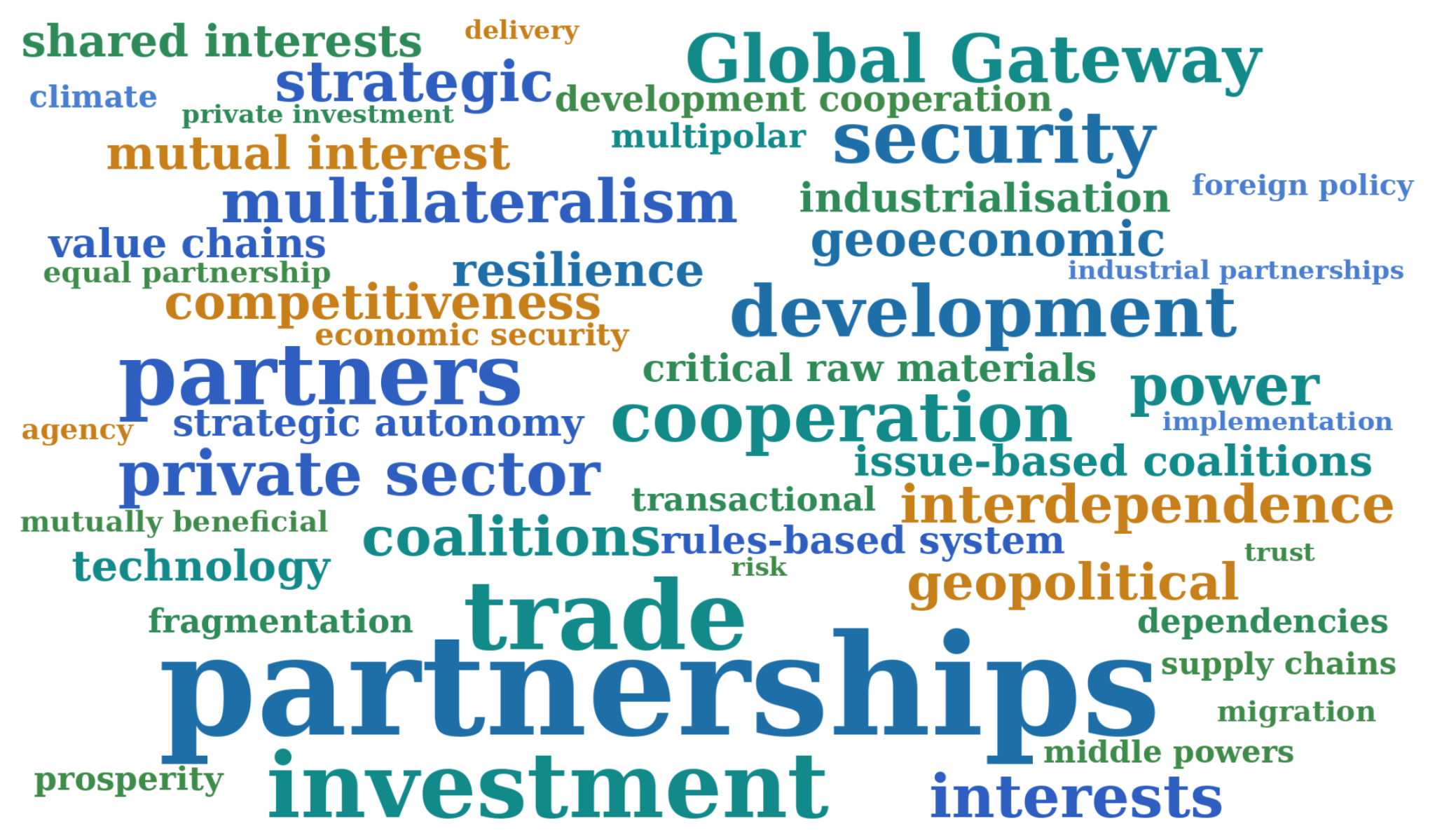
Vocabulary watch
The dominant words of our 40th anniversary conference were sharper than the old comfort language of cooperation: partnerships, trade, investment, security, private sector, competitiveness, strategic autonomy, Global Gateway, critical raw materials, value chains, issue-based coalitions and mutual interest.
Development was still present, luckily, but it sat inside a wider conversation about interdependence, power and delivery. The words were not all new. What felt new was the pressure behind them.
Trade is no longer just a commercial file. It is supply chains, raw materials, industrialisation and economic security. Investment is not only finance. It is influence, risk, jobs and infrastructure. The private sector is not a side conversation. It is increasingly part of how partnerships are expected to deliver. And issue-based coalitions are becoming the way to act when universal agreement is too slow or too blocked.
There was another vocabulary moment that stayed with me – and not only because the speaker happens to be my husband. Steven Everts wondered whether some of the categories we still use are helping us understand the world, or getting in the way. “The West”, he said, no longer feels analytically accurate or politically useful. He asked whether “the Global South” may carry similar problems. The point was a reminder that the language of international relations is also struggling to keep up with the speed of change.
Partnerships, really?
The guests from outside Europe largely agreed that the old model was over and there was no nostalgia for the donor-recipient relationship. They want partnerships, but partnerships that recognise their own priorities, their own choices and their own room for manoeuvre. They do not want to be told to choose between Europe and China, Europe and BRICS, or Europe and anyone else.
Perhaps the term ‘partnership’ is finally becoming what it means. In a “mutually beneficial” partnership, both sides get to define the benefit.
Those who work in international cooperation use the word too easily. Sometimes sincerely, sometimes lazily. The difference now is that interdependence is making the easy version harder to sustain.
Europe needs partners for its prosperity, security and freedom. Partners need Europe too, but not only Europe, and not at any price. That mutual need creates tension. It also creates a more honest opening.
This is why the conference felt so closely connected to the next phase of ECDPM’s work. Our new five-year strategy is built around partnerships and interdependencies, because that is where international cooperation now has to prove itself: in the messy space where domestic priorities, external action, sustainable development and geopolitical interests meet.
There is a risk in the shift. A more honest partnership is not automatically a better one. Development can slip down the agenda, and human rights, as a member of the audience pointed out, become less important.
But there is also a possibility.
If interdependence is now unavoidable, then reciprocity becomes more realistic. Power imbalances have not disappeared and Europe has not suddenly become more virtuous. The conditions that allowed one side to define the terms are weakening.
Forty years in, that may be the shift worth watching. And working on.